
NEWS
2023 Housing Market Outlook
As demand dries up and price expectations are reset, home prices in nearly all metro area markets will drop from pre-pandemic peaks.
The housing market has been running at a frenzied pace for the past two and a half years, but the reckoning is at hand. In the second half of 2022, high home prices and fast-rising mortgage rates stalled market activity. As demand dries up and price expectations are re-set, home prices in most local markets will be dropping from their pandemic peaks.
But 2023 is not 2008. During the last housing market correction, home prices fell by 30% or more in some places. The reasons for the 2008 housing market meltdown have been well-documented. The surge in subprime lending led to unprecedented numbers of homeowners ending up under water on their loans. The number of homes for sale shot up as homebuilders overbuilt just as foreclosures and short sales flooded the market.
The situation today is much different. Home prices increased during the pandemic due to historically low mortgage rates and pandemic-induced demand. However, lending standards are much stricter now than they were 15 years ago. In addition, even as inventory has been rising slightly, supply in today’s market is still at historically low levels.
2023 Is Not 2008

U.S. Outlook
Nationally, home sales have been declining since the summer of 2022 as mortgage rates began their fast rise. As home sales stalled in the third and fourth quarter of 2022, it is expected that the total number of existing home sales in 2022 will reach 5.2 million by the end of the year. While this is a decline of 15.1% from 2021, it is in line with the typical number of annual home sales prior to the pandemic.
Rising mortgage rates have been the main cause of the pullback in sales. The average rate for a 30-year fixed-rate mortgage will end 2022 around 6.5% after surpassing 7% earlier this fall. Mortgage rates will fall in 2023, but they will not come down nearly as quickly as they rose. Mortgage rates may have ended their steady upward rise, but expect volatility in rates throughout the rest of the winter before they begin to ease. Rates will reach 6% by the end of 2023, still much higher than they have been over the past year but similar to where they were back before the Great Recession.
Lower and more predictable mortgage rates will support greater housing demand in 2023. However, home sales will still be lower in 2023 than they were in 2022. There are two primary reasons to expect lower sales in the year ahead.
First, as mortgage rates slid below 3% during the pandemic, some homebuyers purchased earlier than they had planned in order to take advantage of those low rates. These buyers, therefore, have been effectively taken out of the 2023 market.
Second, inventory will remain very low. Most existing homeowners currently have a mortgage rate below 4%. They are not interested in selling because they do not want to take on a mortgage with a significantly higher rate. As a result, new listings will remain constrained and prospective buyers will still find relatively low inventory, which will inhibit home sales in the coming year.
Overall, our forecasts are for there to be 4.87 million home sales nationally, the first time the number of annual sales of existing homes falls below 5 million since 2014. Sales are projected to be down 6.4% from 2022 sales.
Home price growth was strong throughout much of 2022. After rising at double-digit rates in 2021, the 2022 median home price nationally is projected to be 9.5% higher than the 2021 price. Home prices will be relatively stable in 2023, with the median price rising by just 0.3%. Stable prices nationally will be supported by relatively low inventory in 2023.

Metro Areas
In 2023, there will be a lot of variability across local housing markets. Home prices will fall from pandemic peaks in nearly all metro area markets, but some places have a greater risk of significant price declines.
Several factors will lead to steeper price declines in certain metro areas:
- Places where home prices grew the fastest during the pandemic. Nationally, the median home price increased by an average of 10% annually between 2019 and 2022. As remarkable as the national price growth has been, there are some metro areas where median asking prices grew even faster. These markets are among those at greatest risk of a significant price correction. Metro areas with the fastest three-year price appreciation include Austin (+53%), Tampa (+52%), and Miami (+50%).
- Places where inventory has increased quickly. As supply expands, there is a greater risk of prices coming down. Over the past year, the number of active listings has increased the most in Phoenix (+174%), Raleigh (+167%), and Nashville (+145%).
- Places where sellers are dropping list prices. Some sellers are dropping asking prices as they adjust their price expectations in this new market environment. In some metro areas, the median list price is down compared to a year ago. The biggest year-over-year declines in median list prices are in New Orleans (-3%), Pittsburgh (-2%), and Birmingham (-2%).
- Places where affordability is a greater challenge. As home prices escalated, housing affordability became a bigger challenge for homebuyers. Markets where affordability has worsened are at greater risk for more significant price declines in 2023. The most unaffordable market in the U.S. (among the 50 largest metro areas) is Los Angeles, where the median home price is 11 times the median household income. Other very unaffordable markets include San Jose and San Diego (10 times median household income) and San Francisco (9 times median household income).
- Places where the labor market is weaker. Across most of the U.S., the labor market is still strong. However, if the employment picture sours, there is a greater risk of weaker housing market activity and a decline in home prices. The metro areas with the highest unemployment rates—and therefore the greatest risk of home price declines—include Las Vegas (5.3%), Cleveland (4.5%), and Chicago (4.4%).

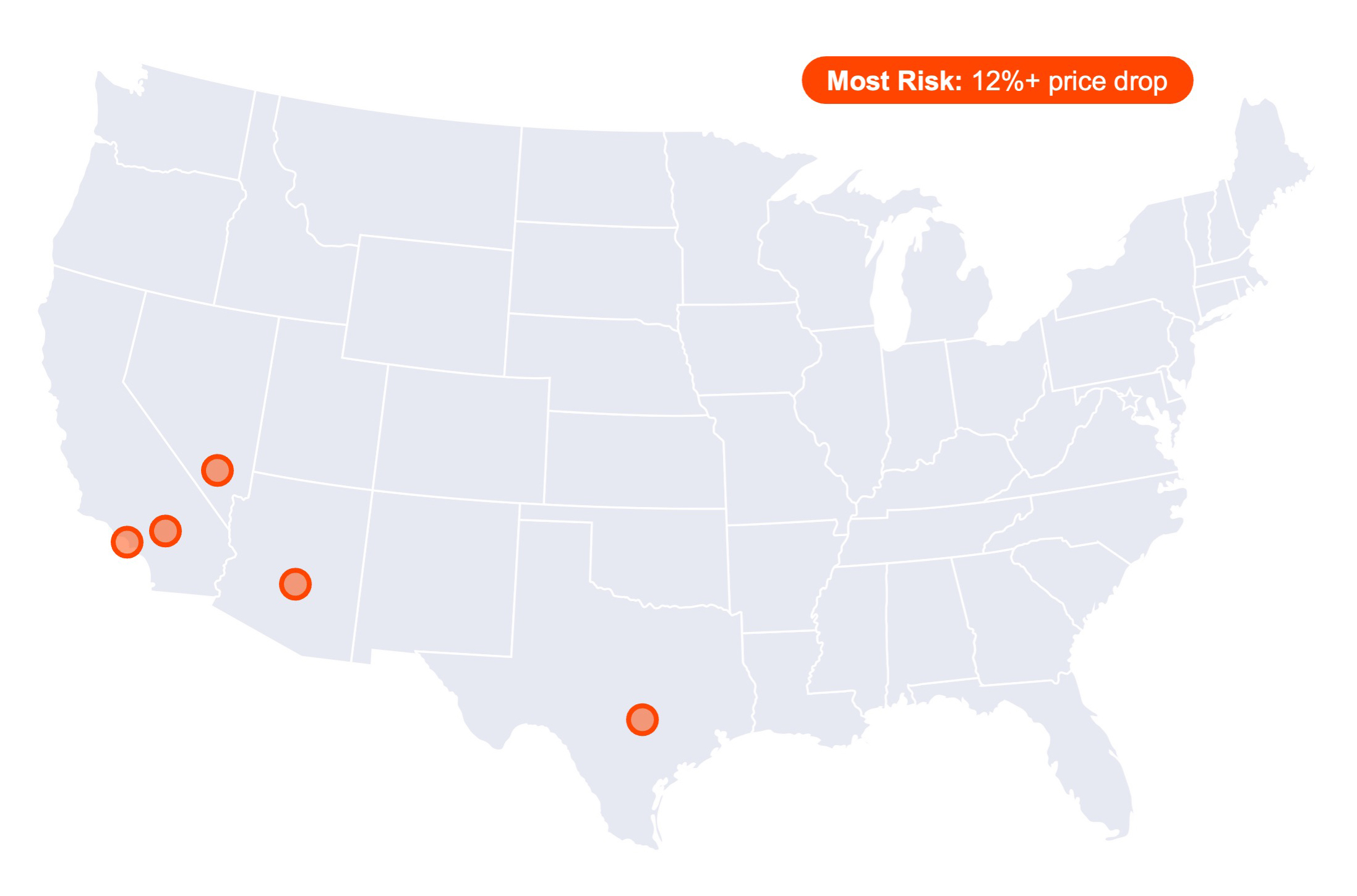
Top 5 riskiest markets: Expect home prices to fall by 10% or more in 2023
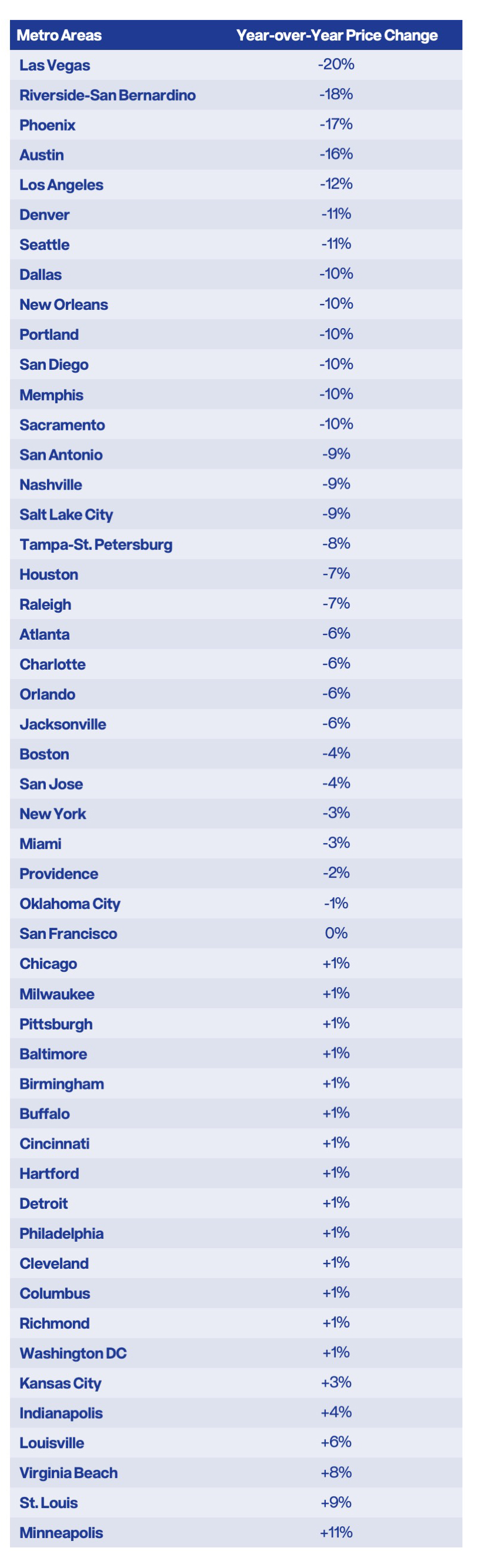
Based on the factors above, Las Vegas, Nevada; Riverside-San Bernardino, California; Phoenix, Arizona; Austin, Texas; and Los Angeles, California top Bright’s list of markets where prices could see the most significant home price declines in 2023.
1. Las Vegas
The median home price rose 41% between 2019 and 2022, faster than the national average. Inventory has nearly doubled in the metro area, rising 89% between October 2021 and October 2022. The median home price is now 7 times the median household income, and while still relatively low, at 5.3%, the region’s unemployment rate is the highest among the nation’s 50 largest metro areas. In 2023, the median home price in Las Vegas is expected to decline 20% year-over-year.
2. Riverside-San Bernardino
The median home price is about 7.5 times the median household income, making the Riverside-San Bernardino metro area one of the least affordable markets in the U.S. Over the past year, inventory has increased by 80%. Home prices are up more than 40% over the past three years. The metro area’s unemployment rate is 3.9%, which is quite low, but is still higher than most other metro areas. Compared to 2022, the region’s median home price is expected to fall by 18%.
3. Phoenix
Supply has surged in the Phoenix metro area. The number of active listings in Phoenix is up 174% compared to a year ago. The median list price in the region has been flat while it has risen in most other metro areas. Home prices did not rise as fast as they did in other regions over the past three years, but the Phoenix metro area’s unemployment rate is higher than most other metro area unemployment rates. In Phoenix, the median home price in 2023 is forecasted to be 17% lower than it was in 2022.
4. Austin
The Austin housing market has been on fire in recent years, and the median home price in the region increased faster than any other metro area over the past three years (+53%). The median list price in October 2022 was flat compared to a year ago. Supply is growing fast, with the number of active listings in Austin up by more than 130% compared to a year ago. The median price in Austin is projected to decline by 16% in 2023.
5. Los Angeles
Los Angeles ranks as the least affordable among the 50 largest metro areas, with the median home price more than 11 times greater than the median household income. Home prices rose relatively modestly over the past three years (+12%), but affordability challenges and relatively high unemployment in the region sets Los Angeles up to see the median home price fall by 12% in 2023.
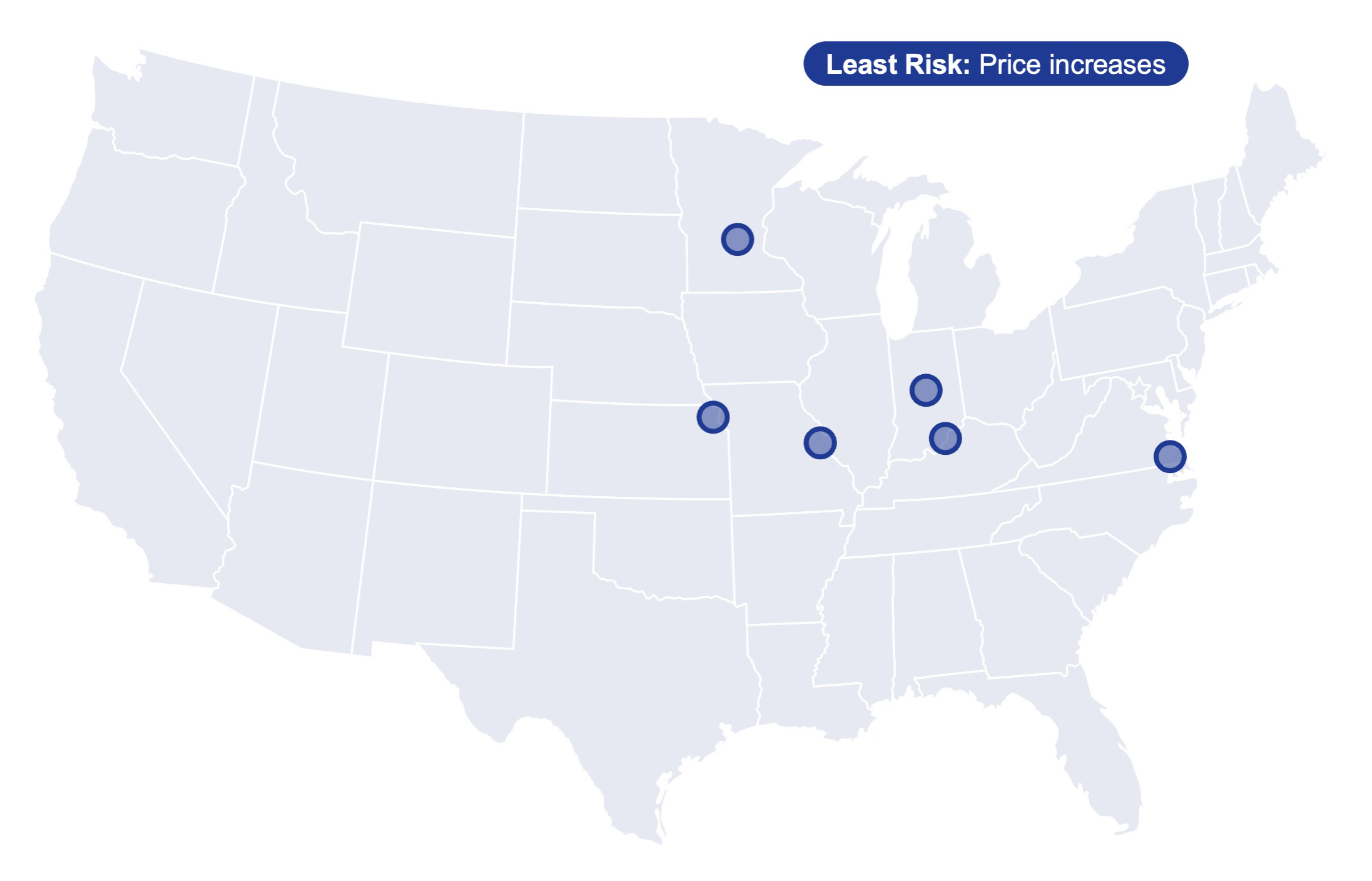
Top 5 strongest housing markets: Expect home prices to rise modestly in 2023
According to the Bright MLS forecast, the metro areas where the housing market will be strongest in 2023 are generally located in the relatively affordable Midwest.
1. Minneapolis, Minnesota
Minneapolis remains a relatively affordable market, with the median home price just 4.6 times the median household income. Inventory is relatively stable in the region, with the number of active listings down 2% compared to a year ago. Home prices are still rising, with the median list price 16% higher than it was a year ago. At 1.9%, the metro’s unemployment rate remains the second lowest among the 50 largest metro areas. Strong economic fundamentals in the Minneapolis region will lead to rising home prices, with the median price up 11% in 2023 compared to 2022.
2. St. Louis, Missouri
The median home price in the St. Louis region is less than four times the median household income. Median prices were up 25% over the past three years, far below the national average increase. Home prices continue to rise, with the median list price nearly 15% higher than a year ago. The unemployment rate is just 2.3%, lower than most other metro areas. Expect the median home price in St. Louis to rise 9% year-over-year in 2023.
3. Virginia Beach, Virginia
Inventory continues to shrink in Virginia Beach, with the number of active listings down 11% compared to a year ago. Prices in the region grew by 24% over the past three years. The region is relatively affordable, with a home-price-to-income ratio of 4.9. List prices are still rising quickly, up nearly 20% compared to a year ago. In the Virginia Beach market, the median home price is expected to rise by 8% in 2023.
4. Louisville, Kentucky
Home prices rose less than the national average, with a 17.8% gain in prices over the past three years. List prices are still up; the median list price in the Louisville metro area was up 15.6% compared to a year ago. Inventory is rising, though not by as much as many other metro areas. As a result, the median home price in Louisville is expected to increase by 6% in 2023.
5. Indianapolis, Indiana
Inventory has increased by more than 50% over the past year, but price growth has been relatively modest in the Indianapolis metro area. The median home price in the region is just 4.2 times the median household income. List prices are still rising, with the median list price up 9% compared to a year ago. The unemployment rate in the metro area was just 2.1%, lower than almost every other metro area. In 2023, the median home price in the Indianapolis metro area is forecasted to increase by 4% compared to 2022.
Median Sales Price: Percent Change 2022 to 2023
Methodology
Bright’s forecast is based on economic data from the U.S. Bureau of Labor Statistics and the U.S. Census Bureau, as well as metro area housing market data compiled from Multiple Listing Services by Realtor.com and available at https://www.realtor.com/research/data/.
Author
Lisa Sturtevant, PhD, Chief Economist at Bright MLS
As Chief Economist at Bright MLS, Lisa Sturtevant is the nation’s only MLS-focused economist. She and her team leverage Bright’s comprehensive real estate data to provide its 100,000+ subscribers with market-leading insights.
https://brightmls.com/research
About Bright MLS
Bright MLS was founded in 2016 as a collaboration between 42 visionary associations and two of the nation’s most prominent MLSs to transform what an MLS is and what it does, so real estate pros and the people they serve can thrive today and into our data-driven future through an open, clear, and competitive housing market for all.
Bright is proud to be the source of truth for comprehensive real estate data in the Mid-Atlantic, with market intelligence currently covering six states (Delaware, Maryland, New Jersey, Pennsylvania, Virginia, West Virginia) and the District of Columbia.
Bright MLS’s innovative tool library—both created and curated—provides services and award-winning support to well over 100k real estate professionals, enabling their delivery on the promise of home to over half a million home buyers and sellers monthly. In 2021, Bright subscribers facilitated $141B in real estate transactions through the company’s platform.
Learn more at BrightMLS.com.