
NEWS
Inflation Rose Again in May
Bright’s Chief Economist, Dr. Lisa Sturtevant, explores the record rise: How will persistently high inflation impact the housing market?
In May, inflation hit a new record high. Consumers are facing higher prices across the board—from gas to food to travel. Some economists had hoped that we had reached peaked inflation last month. However, the new data remind us that higher prices are going to be with us for a while and families are seeing rising prices take a bigger chunk of their household budgets. Concerns about inflation—along with higher mortgage rates and general economic uncertainty—will have an impact on the housing market, reducing buyer demand in many markets.
Inflation is measured as the year-over-year change in the Consumer Price Index (CPI). The CPI is an index measuring the prices of a whole range of goods and services purchased by individuals and families. In May, the U.S. Bureau of Labor Statistics reported that the CPI was up 8.6% year-over-year, the highest rate since 1981. Inflation has hit a new record in nearly every month in 2022.
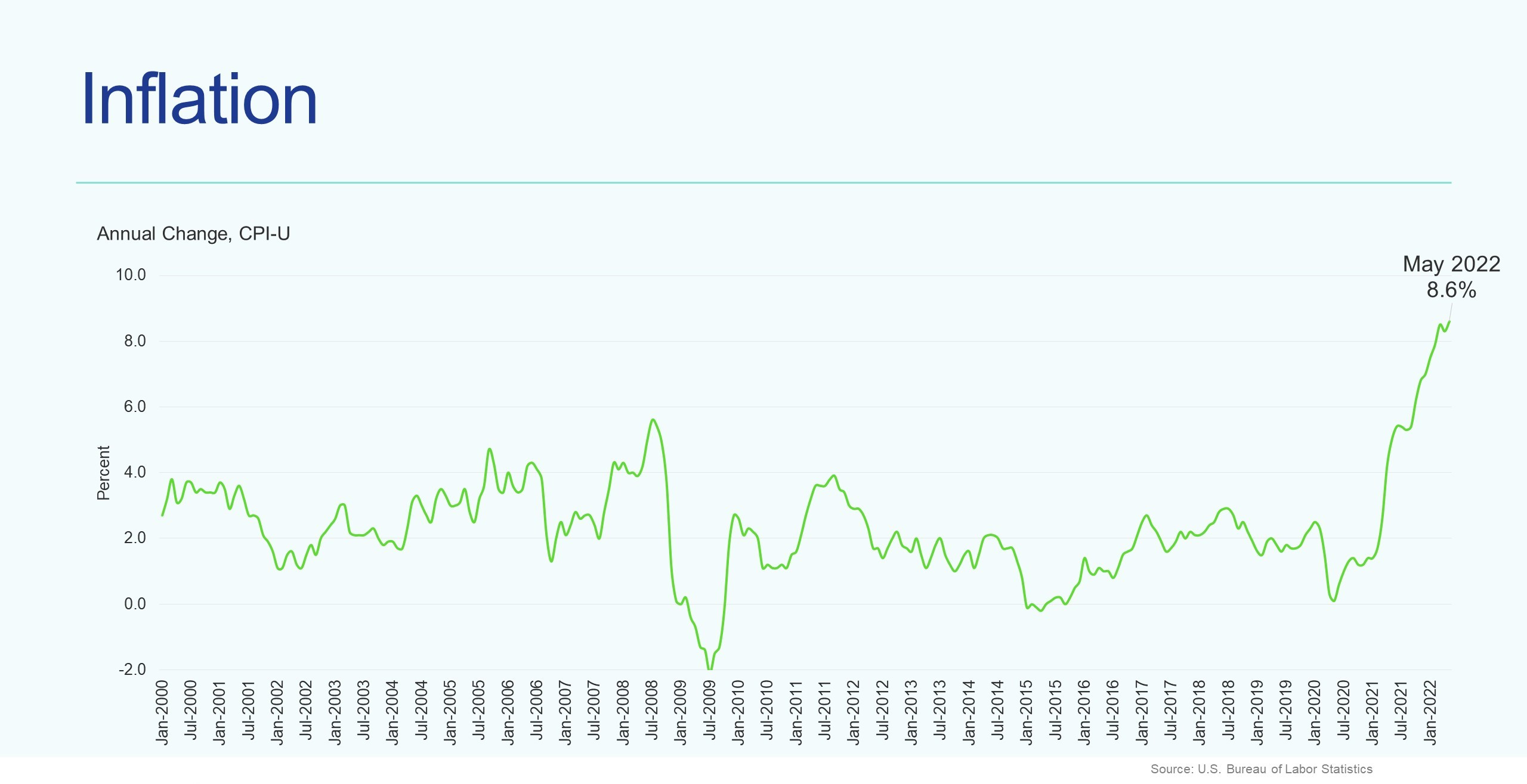
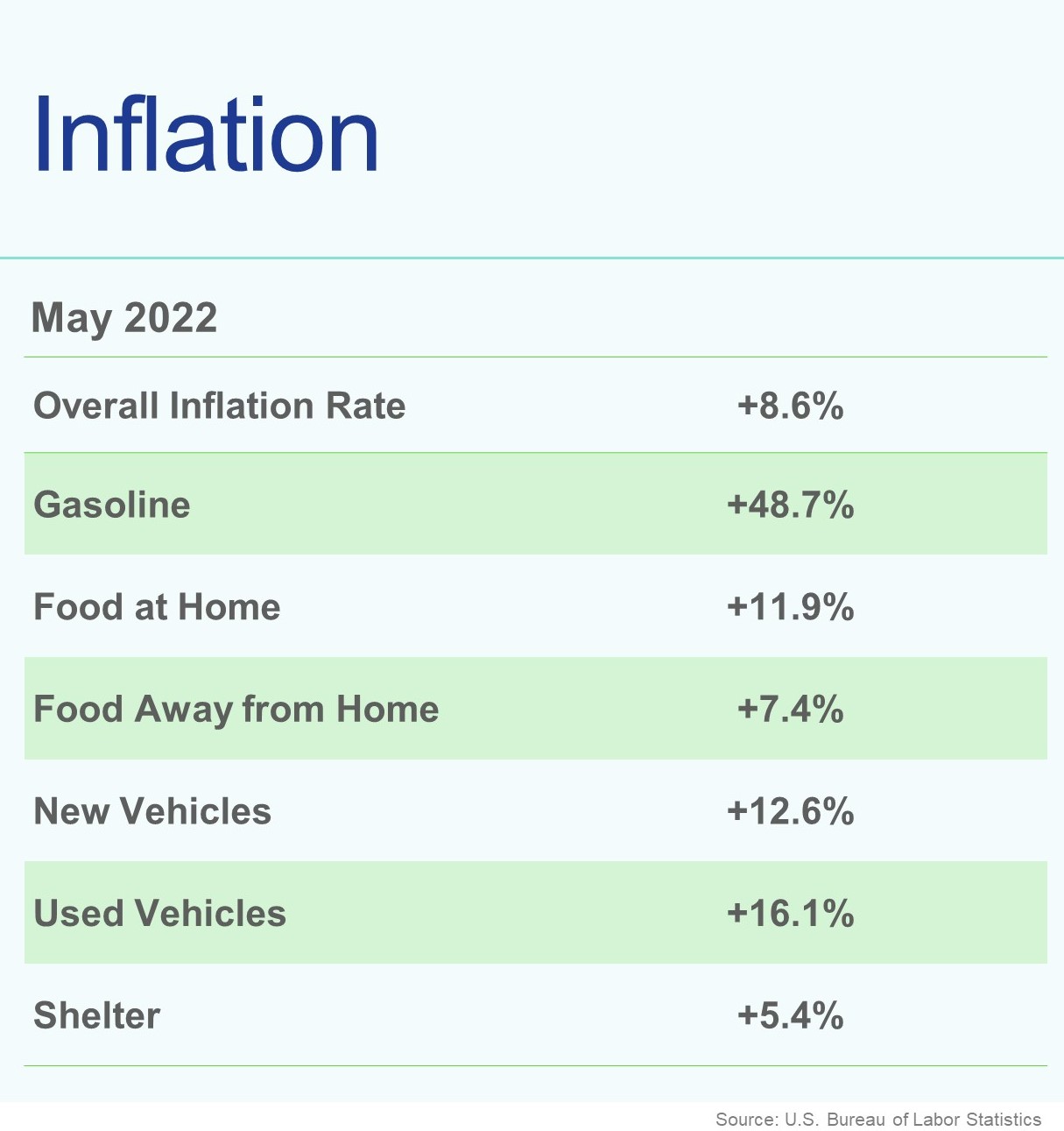
Prices have been up across the board, but the biggest increases have been for gas and other fuels. Gas prices were up 48.7% in May compared to last year. Filling up the tank can now cost more than $100 for some drivers. But it’s not just gas—everything is getting more expensive. For example, the cost of groceries is up 11.9% and dining out costs 7.4% more than it did a year ago.
The Effect of Inflation on the Housing Market
Higher inflation is one factor that will be impacting the housing market in the months to come. There are at least three ways we can think about how inflation could lead to cooling housing demand:
1. Tighter Family Budgets: Families are watching their budgets more closely now, as they are paying more at the pump, at the grocery store, and nearly everywhere else. While wages are also rising, household incomes are not growing fast enough to offset higher prices. As a result, some people who may have been thinking about buying a home will be putting those plans on hold. First-time buyers and moderate-income buyers will be more impacted by high inflation than will higher-income households.
2. Rising Borrowing Costs: Inflation typically leads to higher mortgage rates, and we’ve seen mortgage rates rise quickly in recent weeks. In early June, the average 30-year fixed rate mortgage rate hit 5.23%, which is up more than two percentage points compared to last year. On average, higher rates coupled with rising home prices have led to a 44% increase in the average monthly payment. As a result, some buyers will be forced out of the market.
3. Higher New Construction Costs: Prices are rising for a lot of the materials that go into building a new house, like concrete, bricks, drywall, stucco, appliances, doors, and windows, so inflation means that costs are up for homebuilders, too. While lumber prices have fallen from their record highs during the pandemic, builders still face high materials costs. As a result of higher costs, builders will construct fewer entry-level properties and will build more higher-priced homes. Therefore, options for first-time buyers and more moderate-income buyers may become even more limited than they are now.
The underlying fundamentals of the housing market remain robust. However, economic challenges will be a factor in the market, leading to a deceleration in home sales activity. To stay informed about housing market conditions, be sure to make use of Bright’s housing market reports and get a preview of future buyer activity by tracking the Bright MLS T3 Home Demand Index for the Philadelphia, Baltimore, and Washington DC regions.

Dr. Lisa Sturtevant serves Bright MLS as the nation’s only MLS-focused economist. She leads research, reporting and insights from Bright’s comprehensive array of real estate data. In 2021, Bright’s over 100,000 subscribers facilitated $142B in real estate transactions through its system stretching across 6 states and the District of Columbia.
Get Answers from Our Expert
Have questions about the current housing market you'd like Bright's Economist, Lisa Sturtevant, to address in an upcoming article? Let us know!