
What happens when remote workers are called back to the office?
NEWS
What Will Homebuyers Want in 2025?
More than half of prospective buyers say they are looking for a home in move-in-ready condition.
The 2025 housing market is shaping up to be a challenging one, with mortgage rates persistently elevated, homes prices at record highs, and inventory stubbornly low. Despite the obstacles, there is significant pent-up demand and many would-be homeowners out there still dreaming of their home purchase. What features and amenities will future homebuyers be shopping for?
What buyers are looking for in a home
Bright MLS conducted a nationwide survey of prospective homebuyers between December 15 and 16, 2024, to better understand the home features and neighborhood amenities that are most important to future homebuyers. According to responses from 672 individuals who were planning to buy a home in the future, the most important factor was the condition of the home. More than half (56.1%) said that it was “very important” to buy a home that was move-in ready, with no repairs or major improvements needed. Another 37.8% said that buying a home that was in move-in-ready condition was “somewhat important” to them.
Most important to buyers is whether there will be sufficient room, with 53.2% of respondents ranking the number of bedrooms as “very important” to them.
After the home’s size, the most sought-after feature was a garage, according to respondents planning to buy a home in the future, followed closely by a primary bedroom with en suite bathroom. Nearly 50% of respondents rated these home features as “very important” when looking for a home to buy.
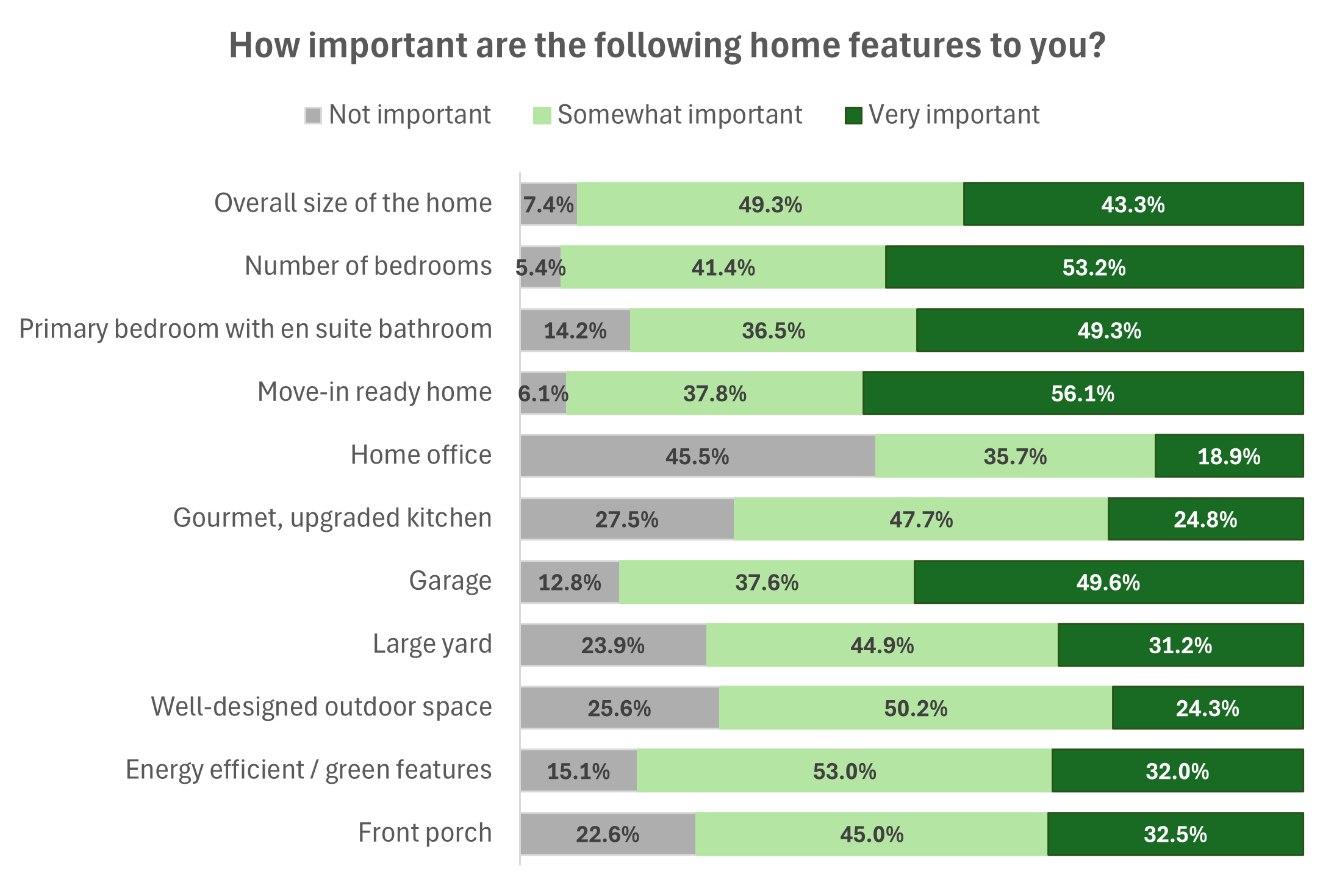
Outdoor space was somewhat less important to survey respondents. Only 31.2% said that a large yard was a “very important” home feature, and just 24.3% responded that well-designed outdoor space was “very important.” But this survey suggests that future homebuyers would rather sit outside than work in the kitchen. Nearly one-third (32.5%) of individuals thinking about buying a home said a front porch was a “very important” feature, but only 24.8% rated a gourmet, upgraded kitchen as a must-have.
During the pandemic, homes with home office space were in demand but future homebuyers are less likely to need a home office as more workers return to the office. According to this survey, only 18.9% of future homebuyers said that a home office was a “very important” feature.
And while a majority of prospective homebuyers said that energy efficient / green features were “somewhat important,” only 32.0% said that they were a “very important” home amenity.
What types of neighborhoods buyers are looking for
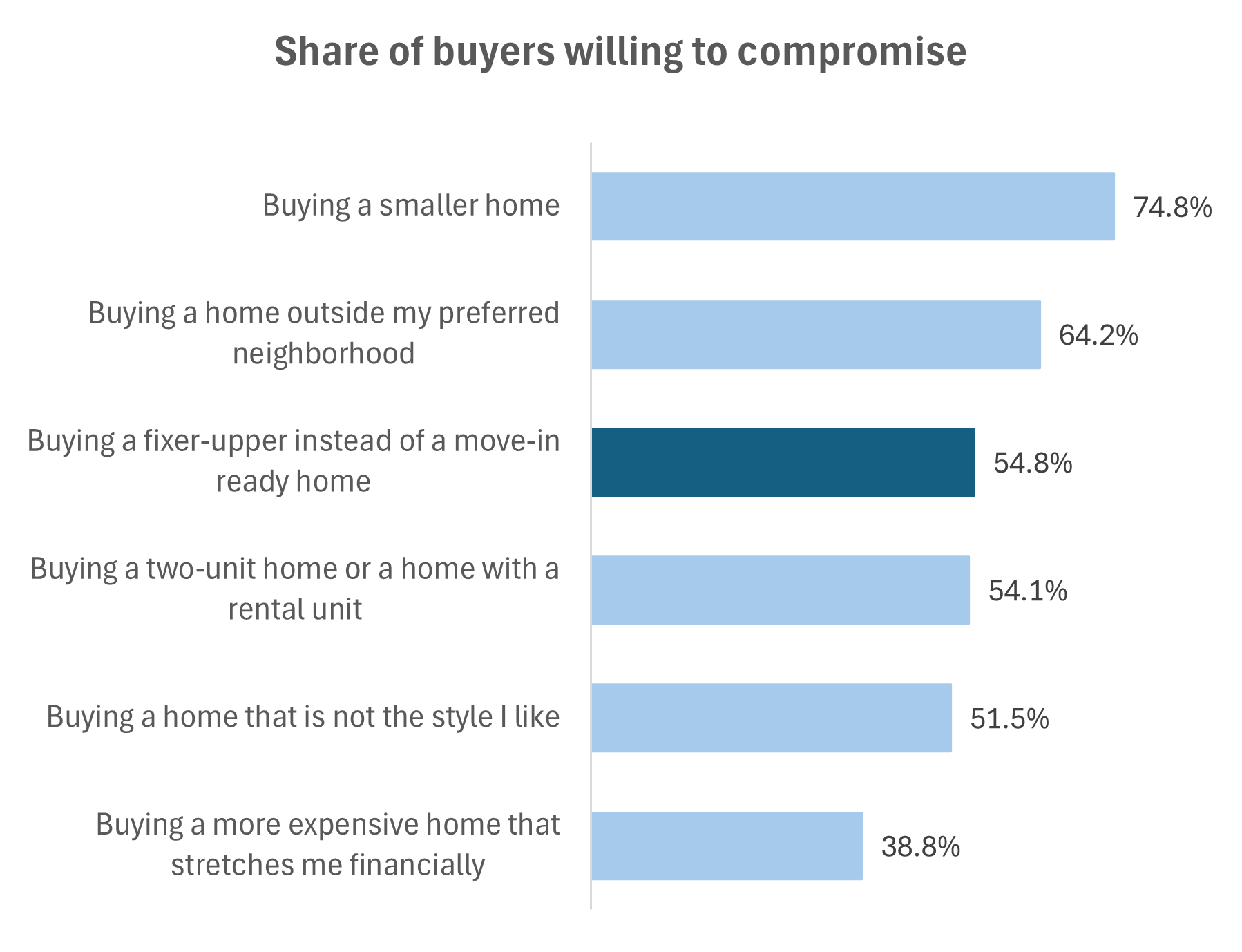
According to the survey, 40.2% of people considering a home purchase said that would look for a home in the suburbs. Nearly a quarter (23.5%) said that they wanted to buy a home in a small town, and 20.6% would look for a home in the city. Only 15.7% said that their preference would be a home in a rural or farm area.
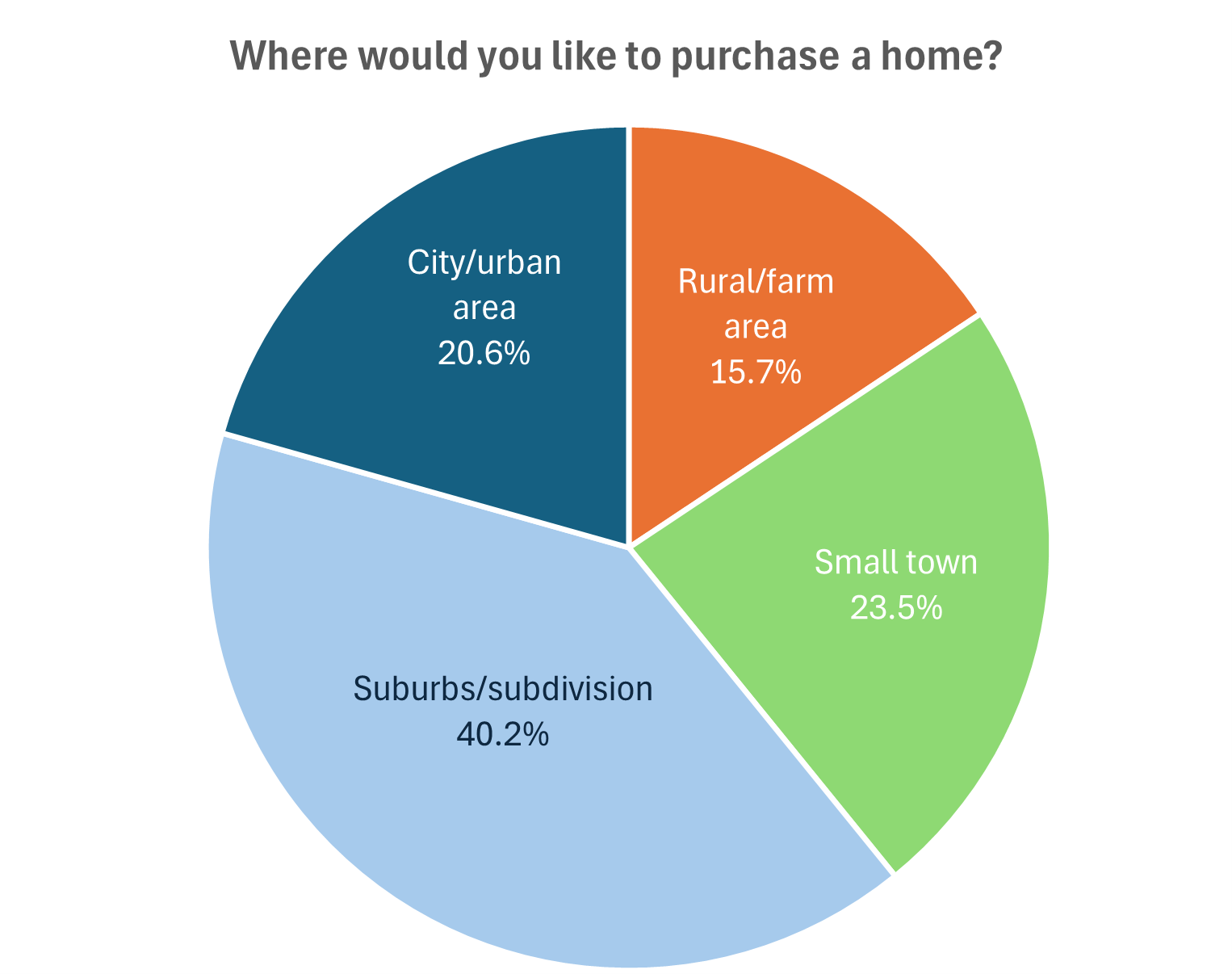
As more people return to the office, proximity to work is becoming a more important factor to homebuyers. More than half (54.0%) of respondents said that distance from job/commute was a “very important” consideration, compared to 32.1% who said distance to family/friends was “very important.”
Walkability was cited by 36.1% of future homebuyers as being “very important,” although a smaller share—24.3%—ranked living near public transportation as “very important.” But around 31% of respondents said that it was “very important” to them to have retail/restaurants nearby and to have parks/open space nearby when buying a home.
School quality is also very important to some homebuyers. Over a third (35.6%) of future homebuyers reported that school quality was “very important” to them. But there is also a large pool of prospective buyers—38.1%—who are not considering school quality in their homebuying process.
Compromises on the size and location of a home
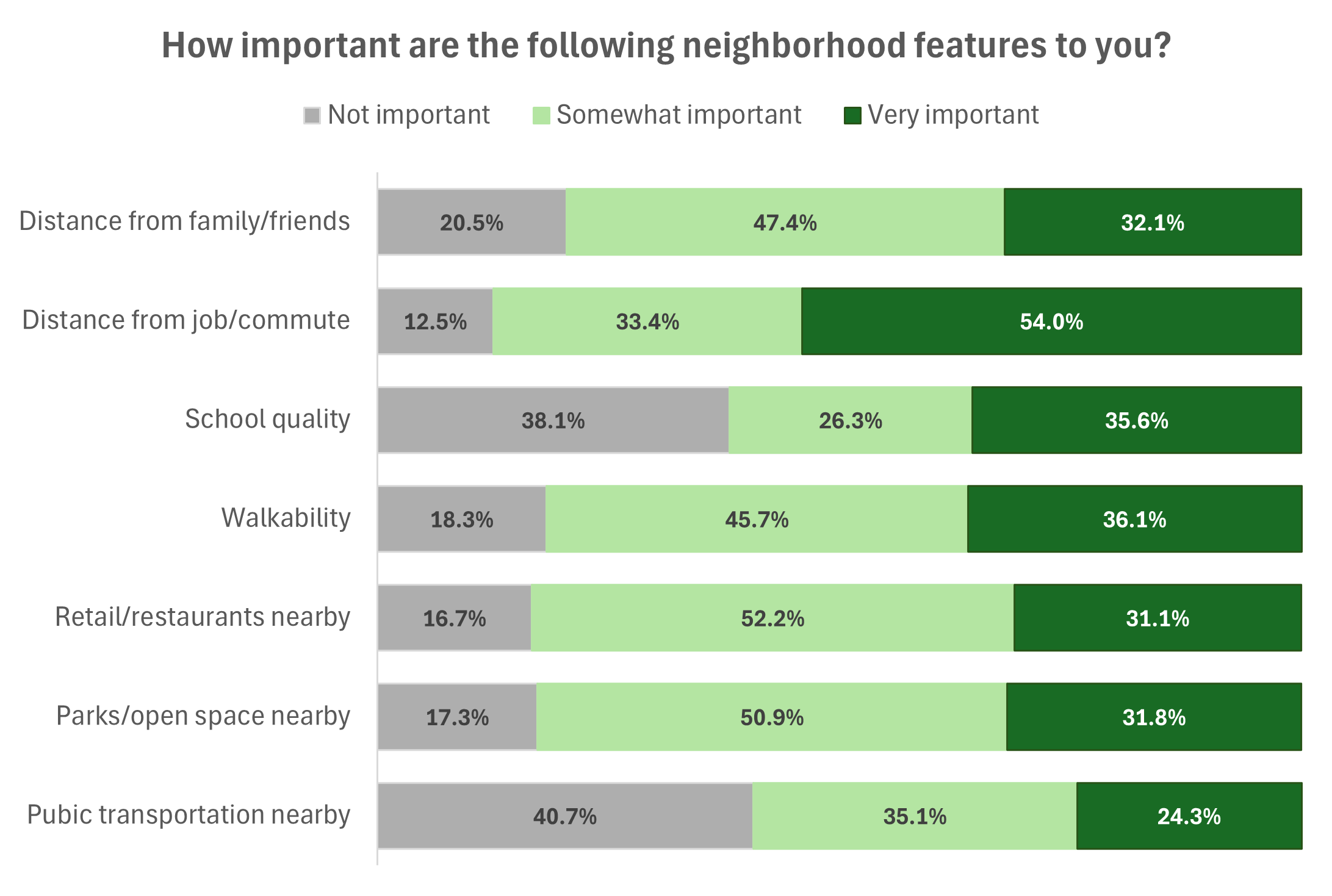
While move-in-ready condition is a strong preference, future buyers do realize that trade-offs are often necessary when looking for a home. More than half of the survey respondents said that they could see themselves compromising and buying a fixer-upper if that was what was available. However, they were more likely to compromise on the size of the home, with nearly three-quarters (74.8%) saying that they would consider purchasing a smaller home than they originally wanted. Nearly two-thirds (64.2%) said they would compromise on their preferred neighborhood.
Buying a more expensive home that is a financial stretch is something prospective homebuyers are least likely to compromise on. Only 38.8% of respondents said they would consider a more expensive home. But buyers may be willing to make other compromises in order to achieve homeownership. According to the survey, more than half (54.1%) of future homebuyers would consider buying a two-unit home or a home with a rental unit.
More than three-quarters plan to use savings for a down payment
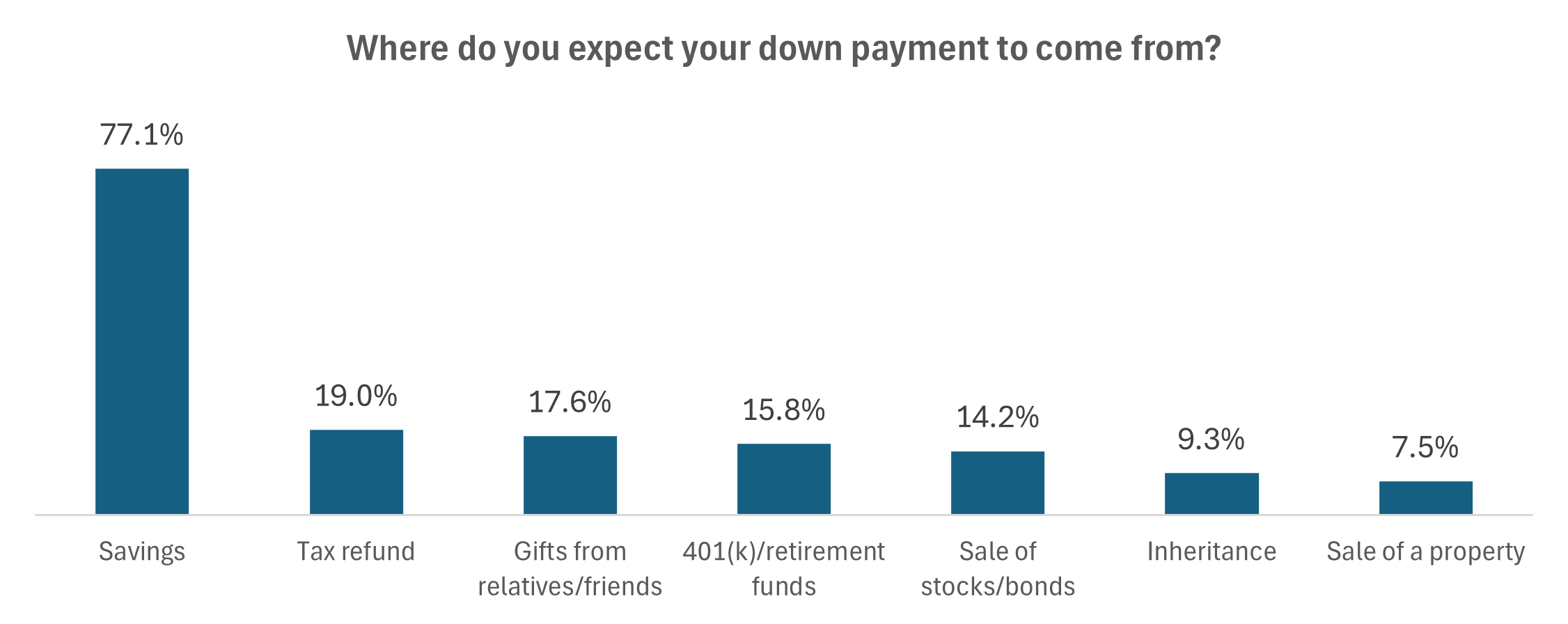
Pulling together the down payment is one of the biggest obstacles to homeownership. According to this survey of people considering a home purchase, more than three-quarters (77.1%) said that they plan to use savings for at least some of their down payment. But future homebuyers are looking to other sources for their down payment, as well. Nearly one in five (19.0%) said they plan to use tax refunds for some or all of their down payment, while 17.6% said that gifts from relatives or friends would be used toward their down payment.
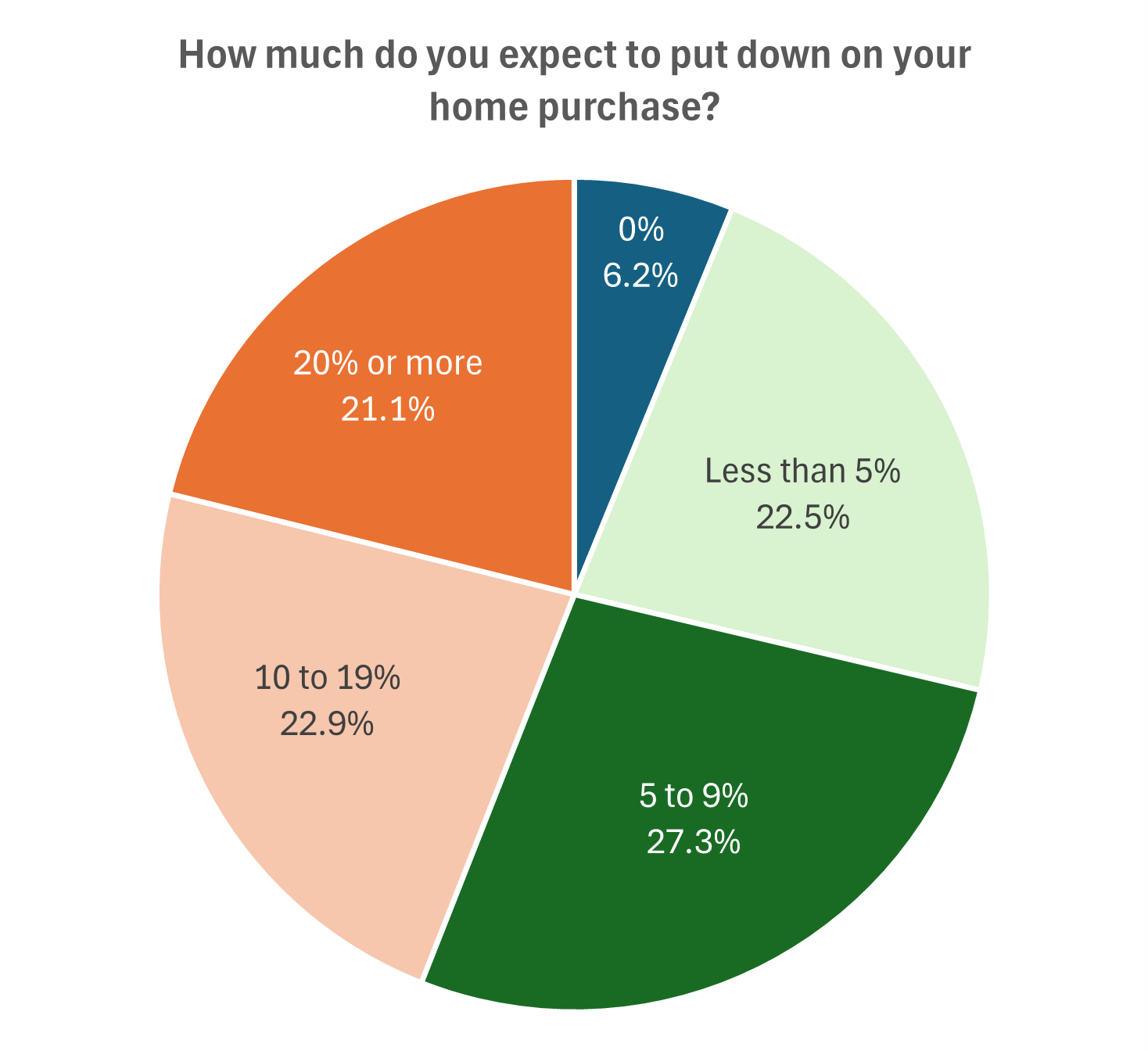
In 2024, the average down payment was 18%, according to the National Association of REALTORS® Profile of Home Buyers and Sellers, the highest level since 1997. According to this survey, nearly eight out of 10 future homebuyers said they expect to put down less than 20% when they buy a home. Nearly 30% expect to put down less than 5%, including 6.2% of people who are considering a home purchase and expect to put nothing down.
Methodology
On December 15 and 16, 2024, Bright MLS conducted a nationwide survey of 780 renters and people living with others and not paying rent, including 672 individuals considering a home purchase in the future, using SurveyMonkey. Respondents were selected from SurveyMonkey’s large pool of volunteer participants to create a sample representative of U.S. homeowners. Overall, the survey estimates have a margin of error of +/-3.8%.
Exclusive Market Research & Analysis
Get the latest research and studies from Bright at BrightMLS.com/Research.
Recent articles
Pandemic homebuyers might be the biggest group of home sellers in 2025.
Back to Top