
Consumers are feeling anxious at the start of the year, according to Bright’s recent nationwide consumer survey.
NEWS
Why Is Housing Unaffordable?
Results from a new survey show consumers blame low incomes, high mortgage rates for current affordability constraints.
More than nine in 10 Americans think housing affordability is a problem, according to a nationwide survey of more than 3,000 Americans conducted by Bright MLS in December 2025. Consumers see relatively low incomes and high mortgage rates as the main reasons housing affordability is a concern.
According to survey respondents, the most commonly cited reason for the current housing affordability challenge is that people do not earn enough money to afford the purchase of a home (55.5%). High mortgage rates were the second most common response given (50.1%).
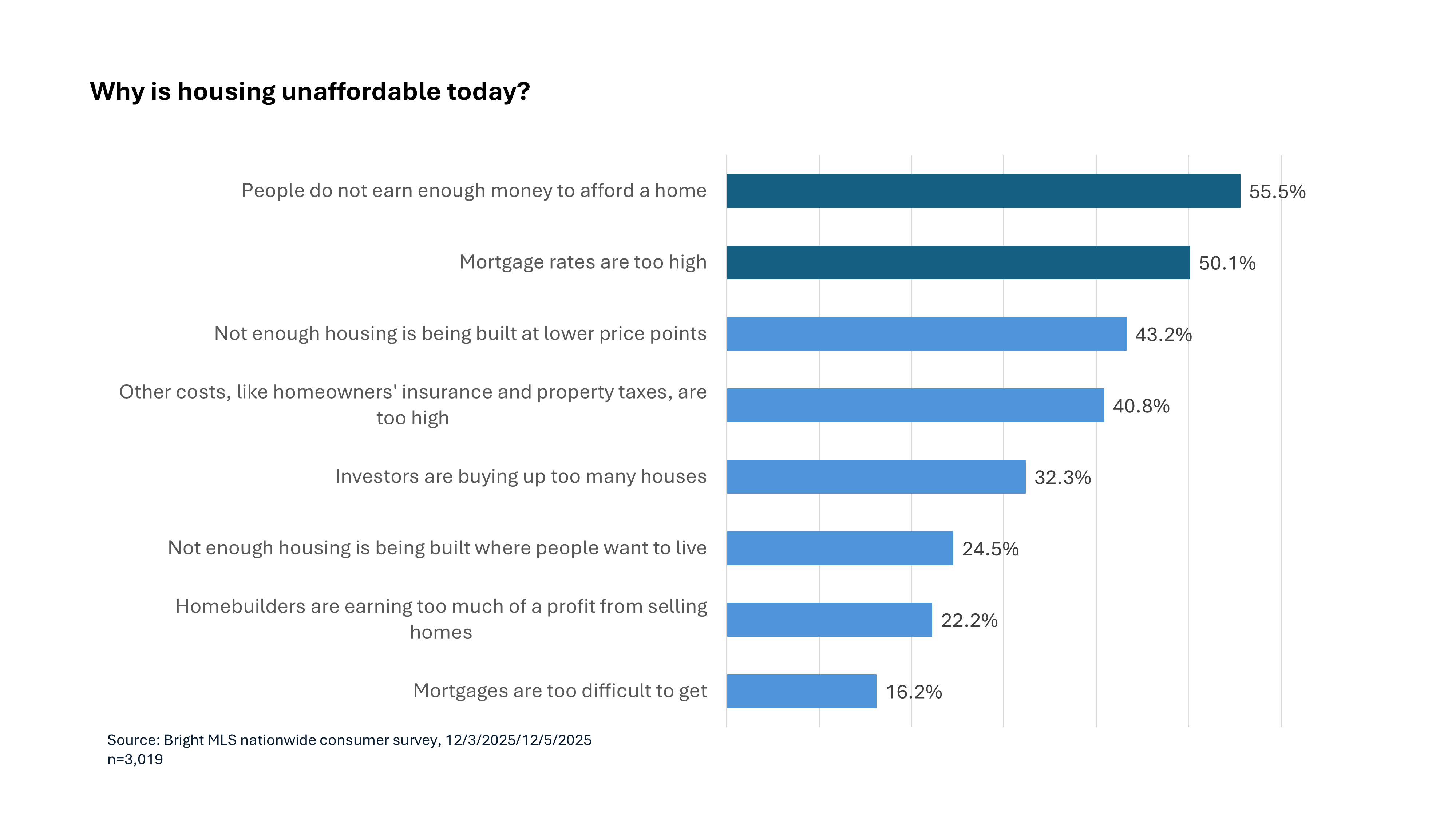
Americans do see a lack of supply of housing as a key constraint, though far fewer report that a lack of new construction is driving unaffordable housing. While 43.2% of respondents said that not enough housing is being built at lower price points, less than a quarter (24.5%) said that there is not enough housing being built where people want to live. Investors buying up homes was cited as a more important driver of the housing affordability challenge (32.3%) despite investors accounting for a relatively small share of home purchases. This survey was conducted before the Trump administration proposed a ban on the purchase of single-family homes by institutional investors.
Across age groups, insufficient income is the most-commonly cited reason for the housing affordability challenge. Younger people (under age 40) are slightly more likely to identify a lack of new construction where people want to live and older people (age 60+) are slightly more likely to cite a lack of new construction at lower price points.
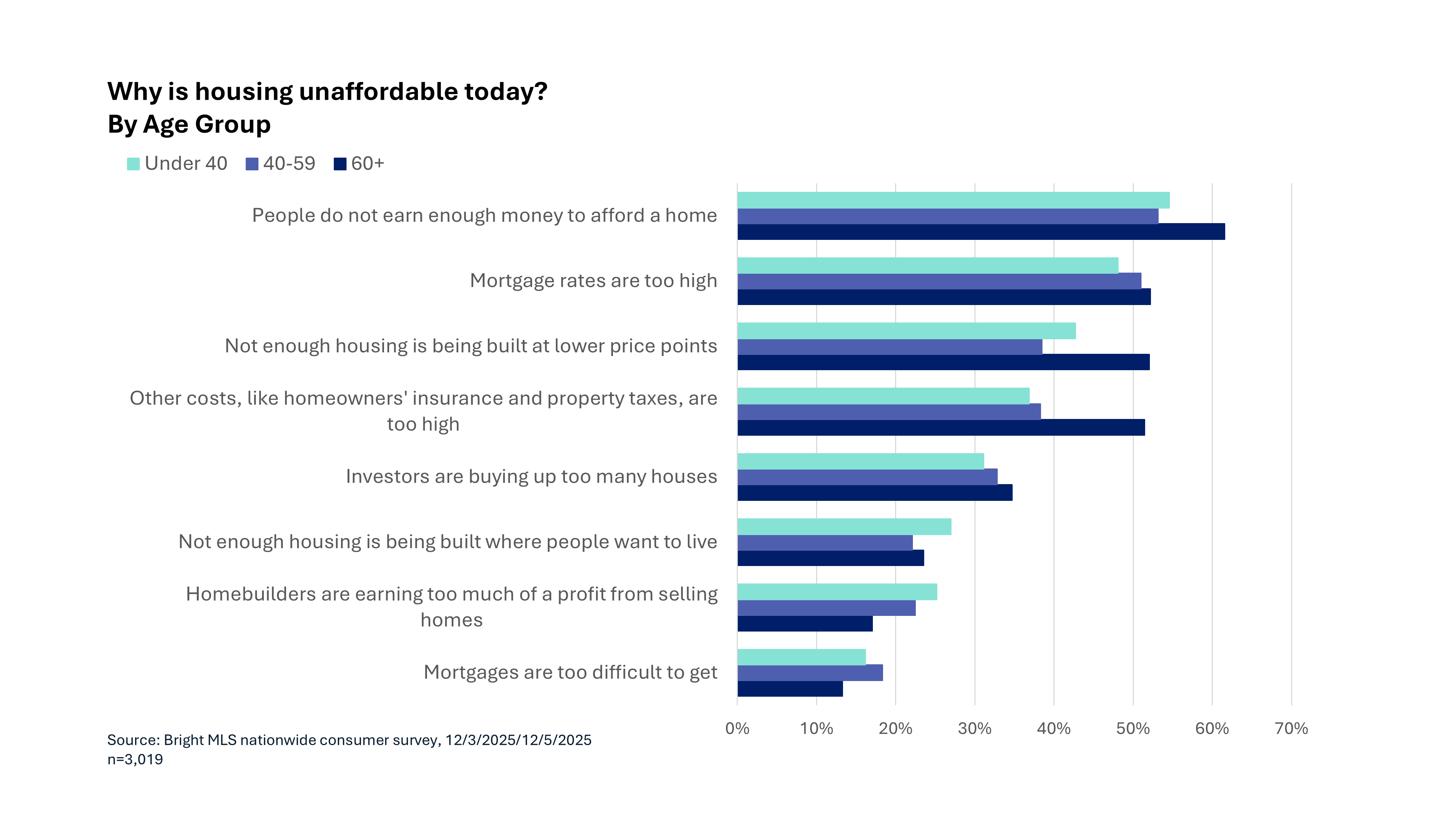
But overall, when thinking about why housing is unaffordable, consumers are focused more on incomes being too low and mortgage rates being too high rather than a lack of supply.
Are they right?
There is an apparent disconnect between what everyday Americans think is the reason housing is unaffordable and what many experts claim. But in the short term, the perspectives of our survey respondents may be on target.
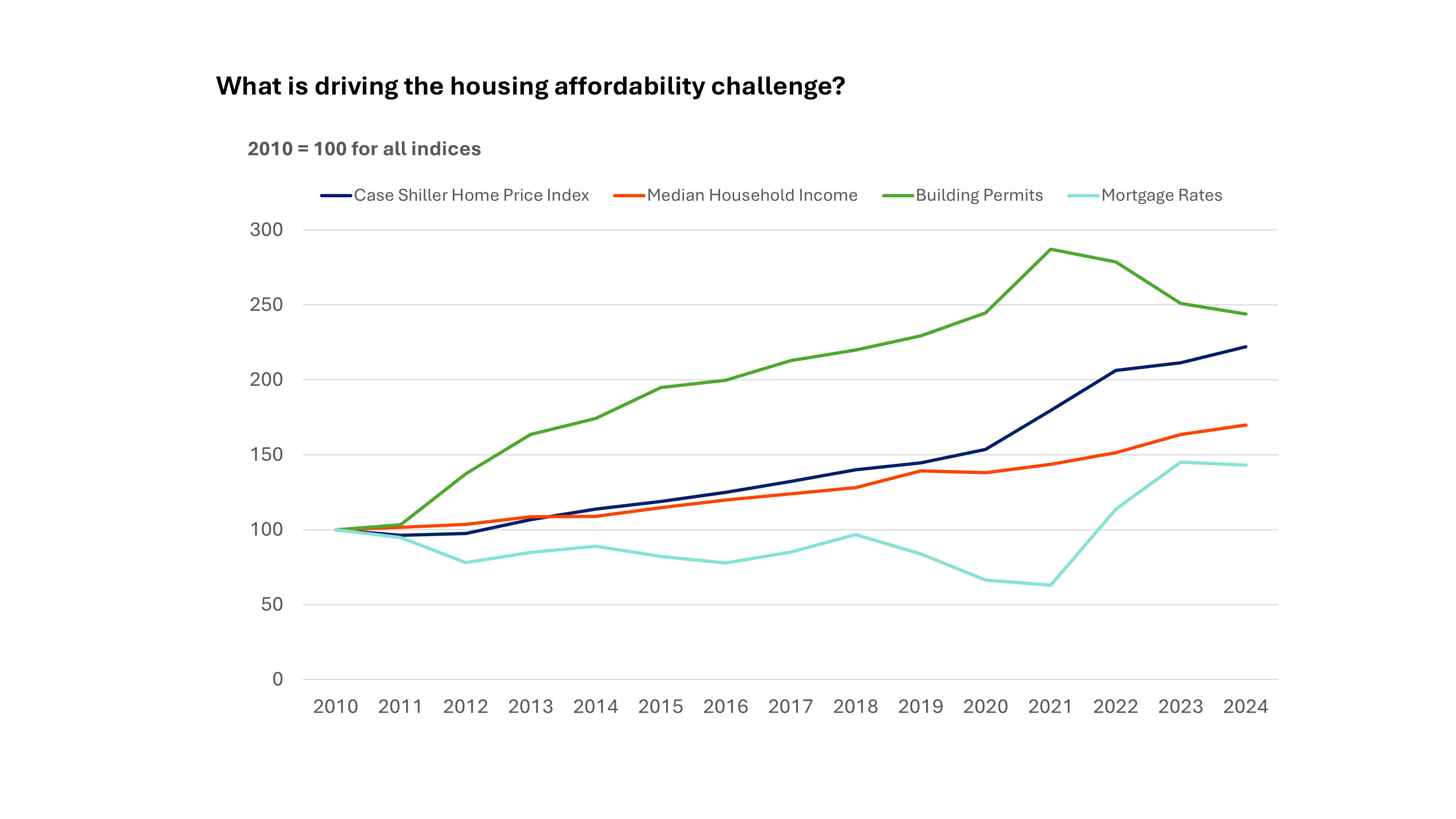
Between 2010 and 2020, household income and home price growth generally tracked, meaning incomes were typically growing about as fast as home prices. However, in 2020, there was a sharp divergence where home prices, as measured by the S&P Cotality Case-Shiller Home Price Index, began to increase faster than the median household income. Mortgage rates, which had been falling from their 2010 levels, began to rise quickly in 2020 before beginning to flatten out.
By contrast, over the past 15 years, residential construction as measured by building permit activity actually seems relatively strong, with permits for new housing construction much higher than in 2010.
Consumers thinking about the relatively recent past understandably point to a lack of income growth and an uptick in mortgage rates when they think about why housing has become unaffordable.
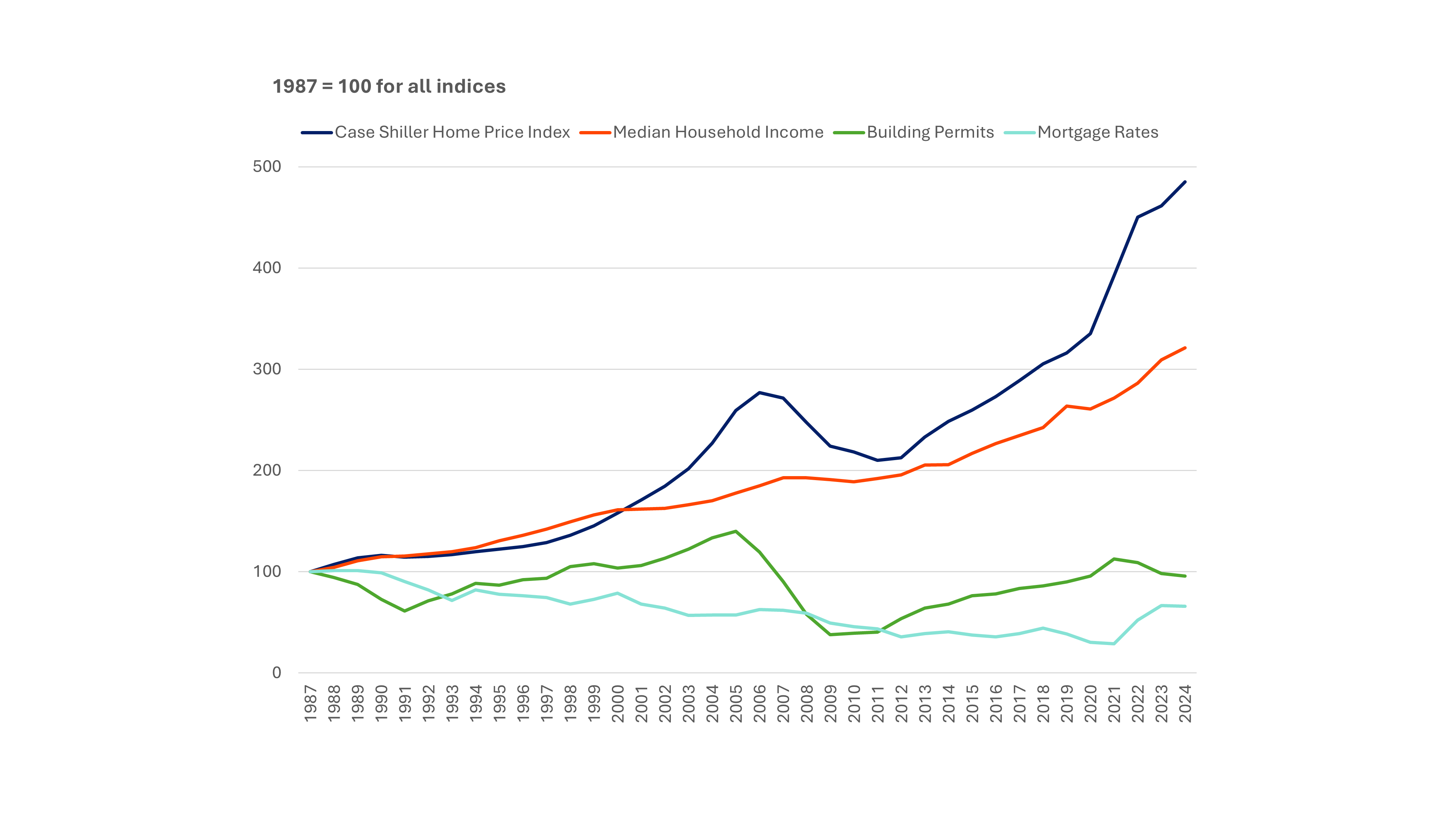
The longer-term picture is a little different. Going back to 1987, it is clear that mortgage rates are lower now than they were back in the 1980s, but there have been big upticks in home price appreciation that corresponded to expansion of mortgage access (through sub-prime mortgage offerings in the early part of the 2000s) and sharp drops in rates (driven by Federal Reserve policy in 2020-2021).
Income growth has generally been slower than home price appreciation since the early 2000s, though without the subprime and pandemic-era booms, those measures would have tracked much more closely.
When it comes to supply, the longer view shows that the amount of new housing construction has lagged significantly compared to the late 1980s and 1990s, even though there was an uptick in more recent years.
Implications for housing policy
Housing affordability has been garnering unprecedented attention at the federal level, while states and localities continue to grapple with housing issues. Both demand-side initiatives, such as down-payment assistance programs, as well as supply-side initiatives, such as reducing regulations around new housing construction, are needed to address the housing affordability constraint.
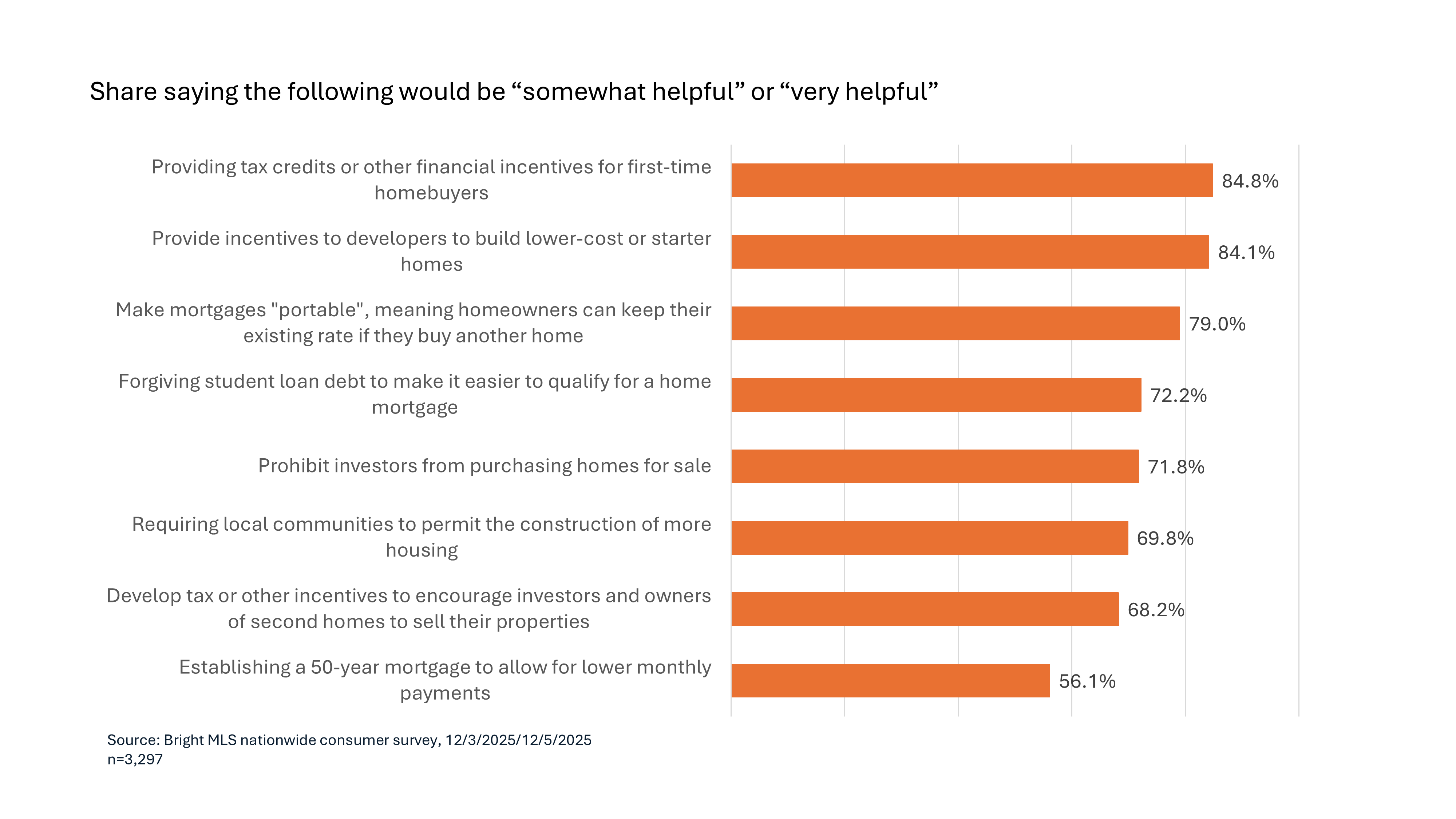
To build support for housing policy initiatives, it is important to understand the perspective residents bring to the issue. Most Americans see value in providing incentives for first-time homebuyers (a demand-side solution) and providing incentives to developers to build lower-cost homes (a supply-side solution). However, there is relatively less support for local communities to permit the construction of more housing generally.
Methodology
Bright MLS conducted a nationwide survey of 3,297 adults between December 3 and 5, 2025. The online survey was administered via SurveyMonkey.
Exclusive Market Research & Analysis
Get the latest research and studies from Bright at BrightMLS.com/Research.
Recent articles
Two new forecasts from Bright Research provide a data-based look at factors shaping the national and regional real estate markets in the coming year.
Back to Top